Listen 🎧 on NotebookLM ⬇️
https://notebooklm.google.com/notebook/80583f5b-faff-45ab-8d24-3900516e0f40/audio
Introduction
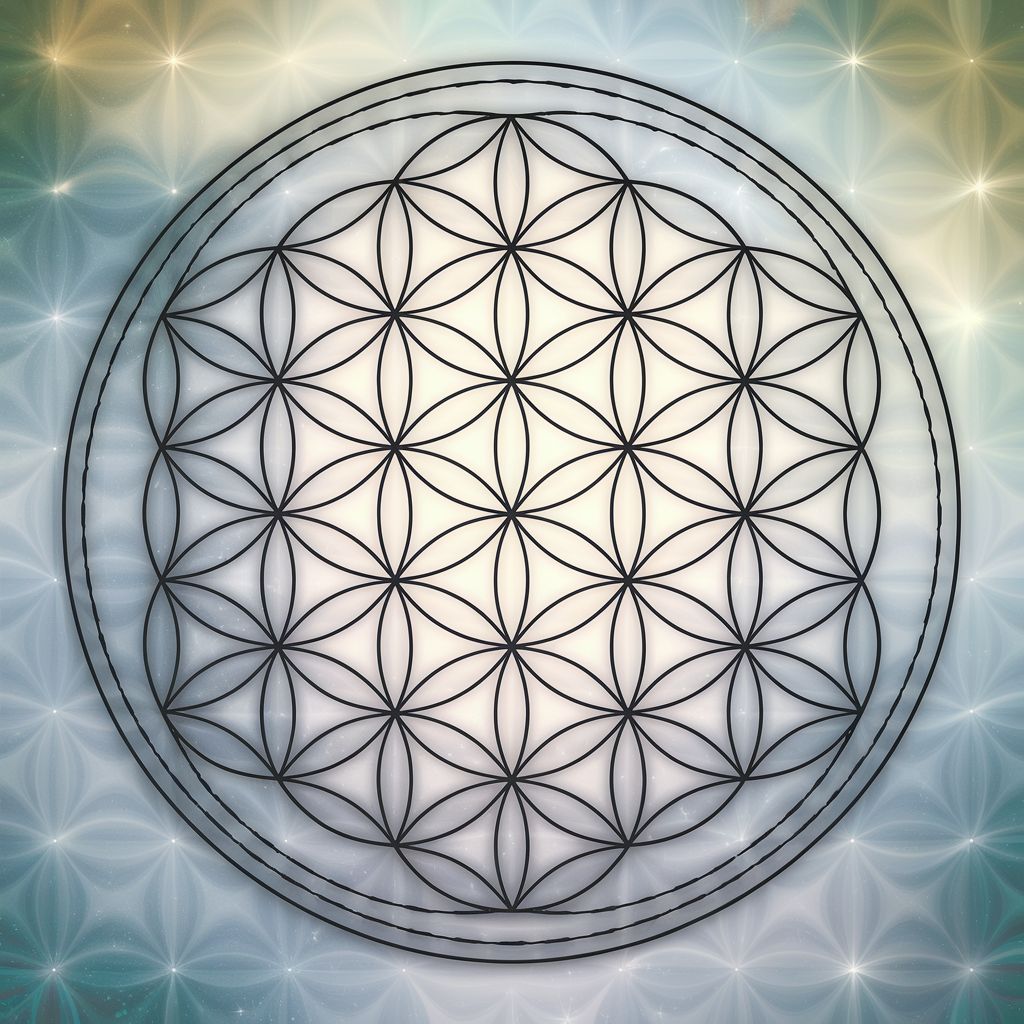
In the realm of sacred geometry, few symbols resonate as deeply as the Flower of Life. This intricate design, composed of overlapping circles, has captivated minds and hearts across cultures and centuries. But what exactly does it represent, and why has it become a focal point for spiritual seekers and artists alike? In this blog post, we’ll delve into the history, significance, and applications of the Flower of Life.
The Origins of the Flower of Life
The Flower of Life’s roots can be traced back to ancient civilizations. It has been discovered in various locations, including:
- Egypt: Found in the Temple of Osiris at Abydos.
- China: Seen in ancient artifacts and temples.
- Greece: Associated with philosophers like Plato.
These findings suggest that the Flower of Life has been a symbol of unity and creation across different cultures and epochs.
What Does the Flower of Life Represent?
Interconnectedness
At its core, the Flower of Life symbolizes the interconnectedness of all living things. Each circle represents an individual entity, while their overlapping sections illustrate how all life forms are intertwined. This idea encourages us to recognize our shared existence and responsibilities toward one another and the planet.
Creation and Manifestation
The design is often seen as a blueprint for creation. The circles can be linked to various aspects of life, from cellular structures to cosmic patterns. Many believe that meditating on this symbol can enhance one’s understanding of manifestation and creativity.
Spiritual Enlightenment
For many spiritual practitioners, the Flower of Life serves as a tool for meditation and contemplation. It is thought to facilitate deeper insights into consciousness and existence, aiding individuals on their journey toward enlightenment.
The Flower of Life in Modern Culture
Art and Design
The Flower of Life has inspired countless artists and designers. Its harmonious proportions make it a popular motif in jewelry, tattoos, architecture, and graphic design. Artists use it to convey messages about unity, balance, and beauty.
Healing Practices
In holistic healing communities, the Flower of Life is often used in energy work and meditation practices. Some practitioners believe that visualizing or surrounding oneself with this symbol can promote healing and balance within the body’s energy systems.
How to Incorporate the Flower of Life into Your Life
Meditation
Consider using the Flower of Life as a focal point during meditation. Visualize its intricate patterns to help calm your mind and connect with your inner self.
Art Projects
Try creating your own version of the Flower of Life using drawing or painting techniques. This can be a therapeutic way to engage with its symbolism while exploring your creativity.
Home Decor
Incorporate the Flower of Life into your living space through artwork or decorative items. This can serve as a constant reminder of interconnectedness and harmony in your daily life.
Conclusion
The Flower of Life is more than just a beautiful geometric pattern; it embodies profound truths about existence, unity, and creation. Whether you are drawn to its aesthetic appeal or its spiritual significance, embracing this symbol can enrich your understanding of life’s interconnected web. As you explore its meanings further, may you find inspiration and enlightenment on your journey.
Feel free to share your thoughts or experiences with the Flower of Life in the comments below!
 World Information Services Unlimited Network
Leave a comment