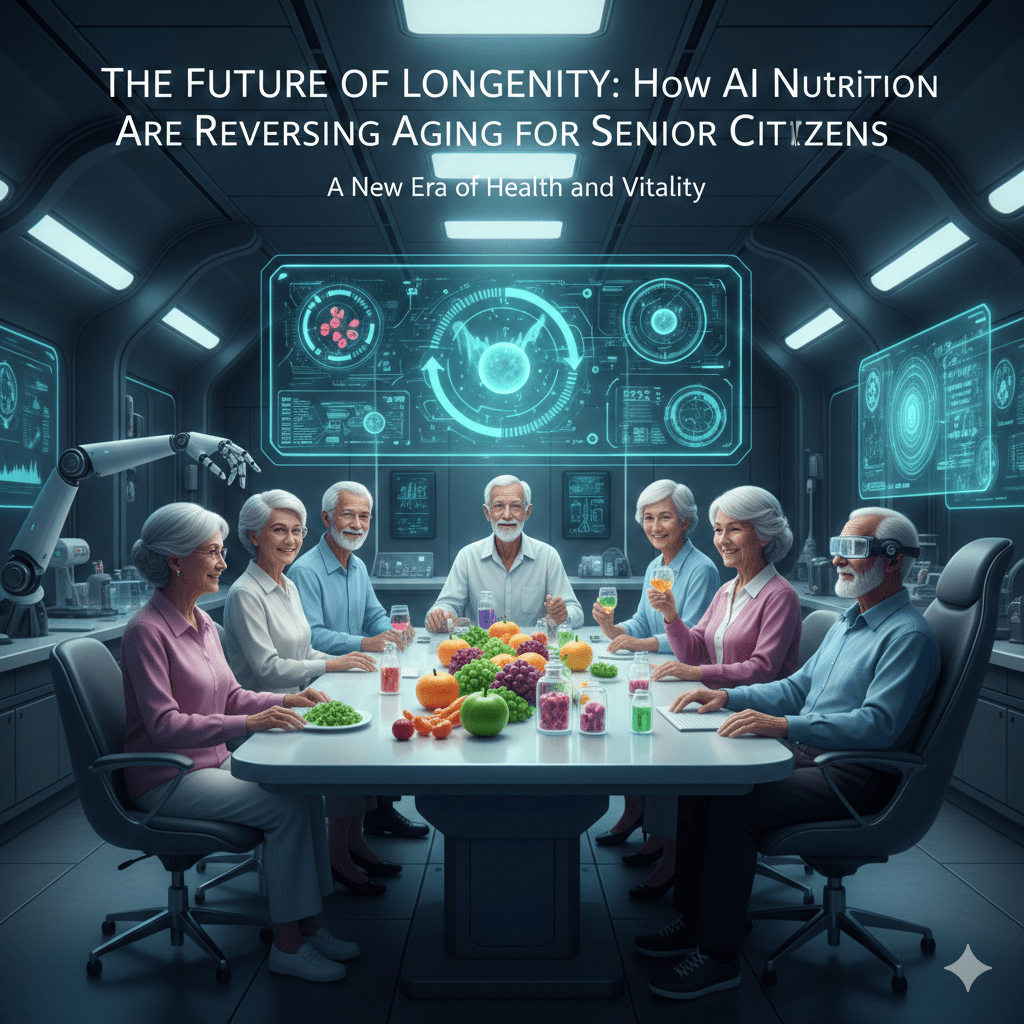
We stand at a remarkable inflection point. For the first time in human history, the question is no longer “How do we live longer?” but rather “How do we reverse the biological clock?”
For individuals aged 70 and older, the convergence of precision nutrition and artificial intelligence is turning this question into reality. The era of generic “eat less, move more” advice is ending. What’s emerging is precision gerontology—a discipline that uses your unique biology to slow, halt, and even reverse aspects of aging.
Below is the evidence‑based roadmap that is already changing the health trajectory for older adults.
🥗 Part I: The Plate of the Future – Foods That Rewrite Your DNA
Forget kale smoothies and celery juice. The real anti‑aging power lies in compounds that influence epigenetic expression—specifically, how your DNA is read and repaired.
We call these methyl adaptogens and polyphenols. They don’t just reduce inflammation; they actively switch off pro‑aging genes and switch on repair pathways.
1. The “Blue Zone” Polyphenols (Cellular Repair)
Long‑lived populations in Okinawa, Sardinia, and Ikaria share very different cuisines—but they share the same molecules.
| Compound | Found In | Senior‑Specific Benefit |
|---|---|---|
| Anthocyanins | Purple sweet potato, berries | Protects telomeres, reduces amyloid plaque buildup |
| Oleuropein | Extra virgin olive oil | Lowers neuroinflammation, supports vascular health |
| Curcumin | Turmeric (with black pepper) | Inhibits inflammatory cytokines, enhances cognition |
| Genistein | Soy, legumes | Mimics estrogen, preserves bone density |
Daily prescription: 2 tbsp EVOO, 1 cup berries, turmeric in cooking, and a serving of legumes.
2. The “Methylation” Diet – Turning Back the Epigenetic Clock
A landmark 2025 study in Aging‑US demonstrated that a diet rich in polyphenolic compounds reduced epigenetic age by over three years in an eight‑week period. The key players?
- Green tea / oolong tea – EGCG optimizes DNA methylation patterns
- Garlic & rosemary – Sulfur compounds support methylation pathways
- Turmeric & berries – Synergistic polyphenol blend
Daily prescription: 2–3 cups of green tea, fresh herbs in meals, and a berry‑rich breakfast.
3. Strategic Protein – The Sarcopenia Shield
Muscle loss is the primary driver of frailty. New 2026 research overturns the “low‑meat” dogma for seniors: minimally processed lean pork, when integrated into a plant‑forward diet, significantly improved grip strength and chair‑rise performance without an exercise intervention.
- Why it works: Seniors require higher leucine (an amino acid) to trigger muscle protein synthesis.
- Practical tip: Distribute protein evenly across three meals (aim for 25–30g per meal). If chewing is difficult, minced meat, eggs, and Greek yogurt are superior sources of iron and B12.
4. Fiber & Bone Defense – The “Hard‑Carb” Fighters
- Fiber: 8–12 servings of high‑fiber foods. Simple hack: leave the skin on vegetables—it doubles insoluble fiber intake.
- Bone health: Three servings of dairy (or calcium‑fortified plant milk) daily.
- Vitamin B12: Almost universal need for supplementation in the aging gut.
The colour rule: Eat purple, deep green, and red‑orange produce daily. Those hues signal high anthocyanin and carotenoid content—nature’s most potent geroprotectors.
🤖 Part II: AI Technologies – Your Personal Aging Navigator
The right foods are the fuel. Artificial intelligence is the navigation system. For the 70+ demographic, AI is shifting from abstract diagnostics to tangible, daily interventions that keep you independent.
1. The Digital Twin – Predictive Prevention Arrives
Researchers at the Weizmann Institute have developed AI models that integrate your biological age, microbiome, and 17 organ systems into a virtual replica of you.
How it changes aging:
Conventional blood tests may call you “healthy.” Your Digital Twin may detect a pre‑diabetes signature two years earlier, or spot a subtle shift in kidney function months before labs flag it.
Senior impact: You don’t wait for disease. You simulate interventions—a specific diet, a drug, a supplement—on your twin and watch your biological age reverse before symptoms ever appear.
2. AI‑Powered “Visual” Menus – Reawakening Appetite
Malnutrition affects nearly 40% of aged‑care residents, often because dementia or communication barriers prevent them from expressing food preferences.
The innovation: AI‑generated photorealistic images of meals. A tablet shows a senior a picture of steamed fish with rice, steam rising, on a blue plate—and the patient, who couldn’t verbalise “I want fish,” now nods and eats.
The device: Projects like (Dietary Worry‑Free) combine deep learning image recognition with continuous glucose monitors. It scans your plate, calculates glycemic load in real time, and suggests the next optimal meal to stabilise energy and inflammation.
3. Remote Biomarker Surveillance – The Invisible Clinic
Movement is now a vital sign.
Head‑worn devices (next‑gen hearing aids, smart glasses) translate everyday movement into biomarkers. They detect fall risk and neurological decline weeks or months before a fall occurs.
Video‑based frailty assessment: A standard webcam video can now be analysed by AI to measure 3D body shape, gait speed, and muscle fatigue. This allows weekly frailty monitoring without leaving home or wearing sensors.
4. Caregiver‑Guided Robotics – CARAH
Robots are not replacing human touch; they are eliminating the repetitive physical strain that burns out caregivers.
The breakthrough: New frameworks (CARAH) allow a caregiver to demonstrate a task once—lifting a blanket, adjusting a pillow—and the robot learns the motion instantly. The human returns to what matters: complex, compassionate interaction.
⚠️ Critical Caveats – What We Still Don’t Know
As your advisor, I must be transparent:
- Observational vs. causal: Much of the polyphenol research is epidemiological. We need large‑scale randomised trials to prove causation, not just association.
- Bioavailability: You can eat turmeric all day, but without black pepper or a fat carrier, curcumin may never reach your cells. AI will soon solve this by tailoring how you eat, not just what.
📋 Strategic Summary – Your Personal Action Plan
To reverse health trajectories at 70+:
- Adopt an AHEI‑style diet – high in vegetables, whole grains, nuts, legumes.
- Supplement with methyl adaptogens – green tea, berries, turmeric, garlic.
- Do not fear animal protein – lean, minimally processed meat preserves strength.
- Seek a Digital Twin assessment if available – it reveals hidden metabolic risks.
- Use AI visual tools if cognitive decline affects appetite or communication.
💡 The Bottom Line
There is no single magic pill. The real intervention is intelligent information—biological information from food, and digital information from AI. When combined, they form the most powerful geroprotective strategy we have ever possessed.
The goal is not merely to add years to life, but to add life to those years. With today’s science, that goal is finally within reach.
For personalised guidance, consult a geriatrician or a certified functional medicine practitioner.
The Future of Longevity
Listen 🎧 to the Podcast 👇
 World Information Services Unlimited Network
Leave a comment