
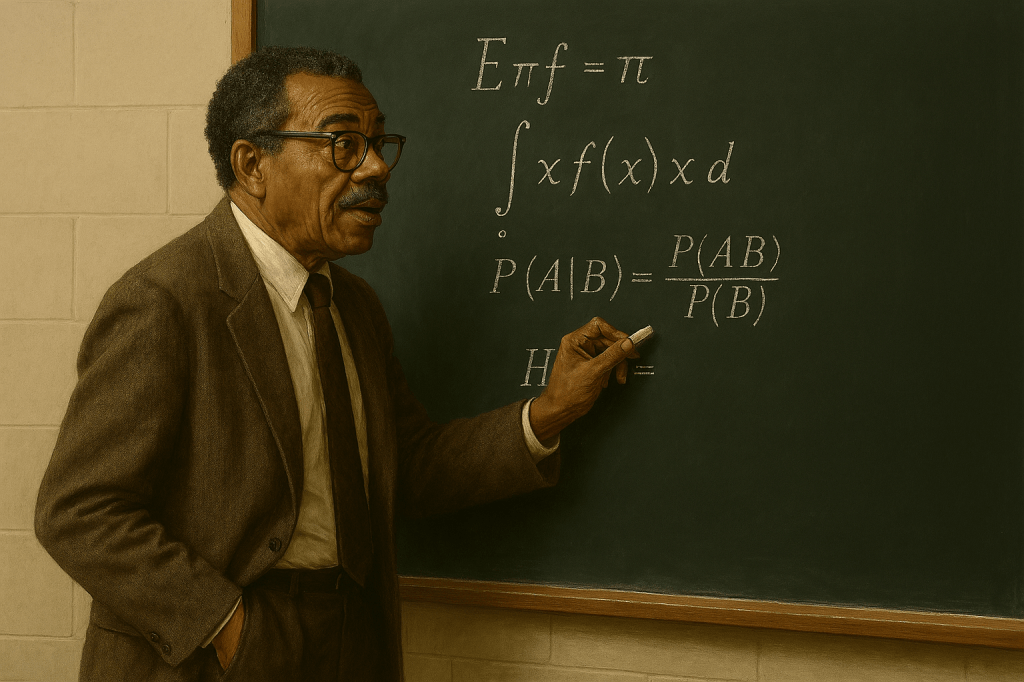
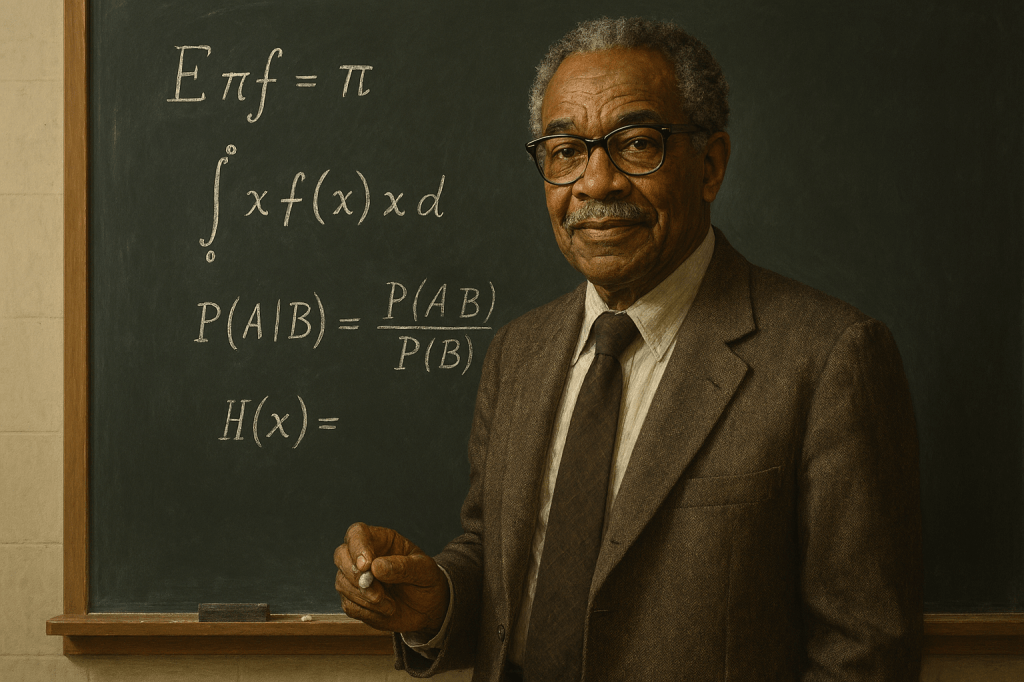
When NVIDIA introduced its Blackwell AI architecture, it wasn’t just naming a chip. It was honoring Dr.David Harold Blackwell — a pioneering Black American mathematician whose ideas helped shape how machines learn.
Long before modern Artificial Intelligence (AI), Blackwell studied how decisions are made under uncertainty. His work in probability, statistics, and game theory explored a simple but powerful question: how do we use information to make better choices?
That question now sits at the heart of machine learning.
Howard University: Where It Took Root
After earning his PhD, Blackwell was denied positions at many white institutions because of racial discrimination. In 1944, he joined Howard University as a mathematics professor.
His decade at Howard was foundational. There, he produced major research in probability and statistics, mentored students, and strengthened one of the nation’s leading historically Black mathematics departments.
Howard was not a detour. It was where his intellectual legacy took root.
He later became the first Black tenured professor at UC Berkeley and, in 1965, the first Black American elected to the National Academy of Sciences.
The Mathematics Behind Modern AI
One of his key contributions, Blackwell’s Theorem, showed how to compare information systems and determine which leads to better decisions. Today’s AI models do exactly that: they process data, reduce uncertainty, and optimize outcomes.
When NVIDIA named its Blackwell architecture, it acknowledged a deeper truth.
AI runs on silicon.
But it is built on mathematics.
Dr. David Blackwell didn’t just inspire a name.
He helped design the logic that powers intelligent machines today.
 World Information Services Unlimited Network
Leave a comment